
Main
News
Kyrgyz Doctor Conducts Research in Japan for the Benefit of the Country

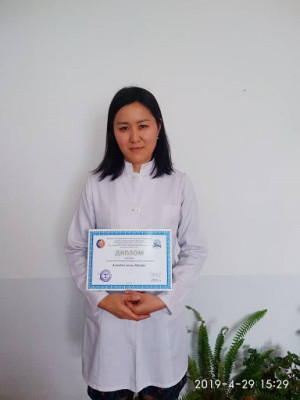
Kyrgyz doctor Ayperi Asanbek kyzy is conducting scientific research in Japan and contributing to projects that impact public health. She is 36 years old, a nephrologist, and a graduate of Osh State University.
Inspired by her mother’s illness, she chose a career in medicine and is now involved in international research projects, collaborating between Osh State University and foreign universities. Her work focuses on kidney diseases, including renal failure, hypertension-related conditions, and hemodialysis.

— Ayperi, could you tell us about yourself and your educational background?
— I was born and raised in Kara-Suu, Osh region. I graduated from Osh State University’s Faculty of Medicine in 2012, where my medical career began.
— Why did you choose medicine and nephrology?
— I was interested in medicine from childhood, and my mother’s illness played a key role in choosing nephrology.
— What were your childhood dreams, and have they come true?
— I dreamed of becoming a scientist and winning the Nobel Prize. Today, working in science means that an important part of that dream has come true, and my goal is to open opportunities for future generations.

— You worked in hemodialysis centers for many years and later served as Deputy Director of a regional clinical hospital. How did this experience shape you?
— I started working in the hemodialysis department of the Osh Interregional Clinical Hospital in 2013. As one of the largest hospitals in southern Kyrgyzstan, it provided strong clinical practice, teamwork skills, and leadership experience, shaping both my professional and personal growth.
— You are currently a PhD student at the Tokyo Institute of Science. What are the main features of the research environment in Japan?
— The research environment in Japan demands high independence and discipline. Weekly progress reports and strong competition encourage constant self-improvement and responsibility for results.

— What are the main areas of your research on kidney diseases?
— In Kyrgyzstan, the causes and regional specifics of kidney diseases are still insufficiently studied, while the number of patients requiring hemodialysis continues to grow. My main goal is to identify risk factors and develop scientific recommendations for prevention.
— How did the air pollution project between Osh State University and Japanese universities begin?
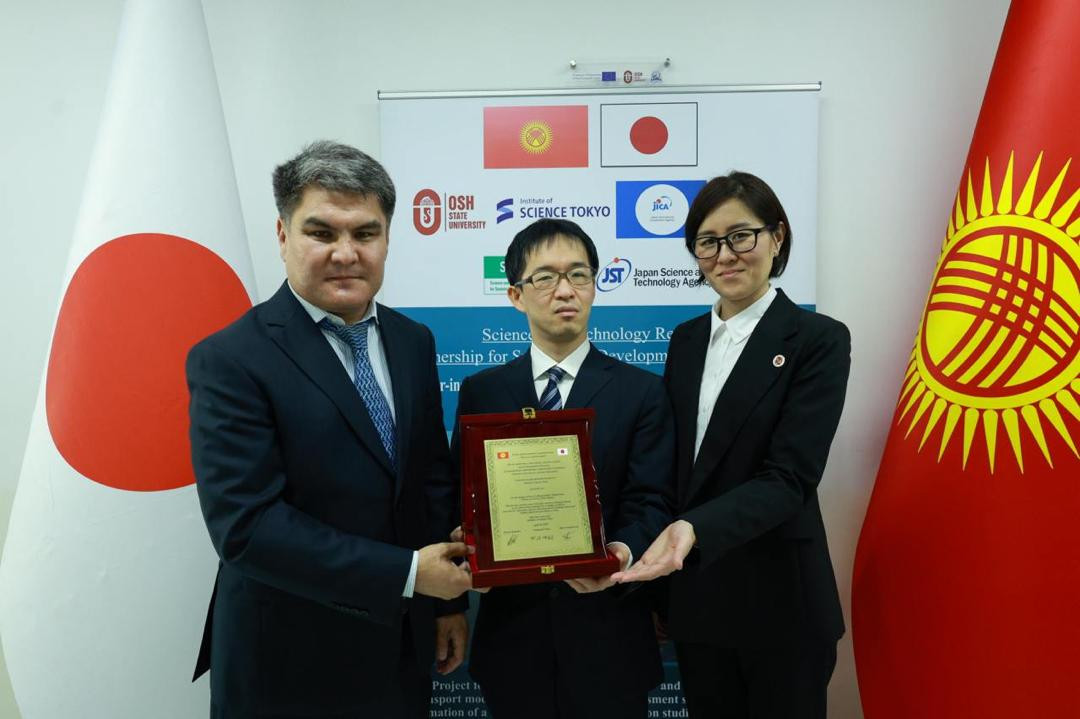
— The idea emerged in 2022 during my master’s studies in Japan. We later joined the SATREPS program, a major Japanese government–supported international research grant, after two years of joint preparation and collaboration between the partner universities.

— What is the importance of this five-year project for Kyrgyzstan and Osh State University?
— The project is highly important, as air pollution has increasingly affected public health, especially in southern regions. For the first time, large-scale research will be conducted, including the installation of an air quality reference station and development of laboratory capacity at Osh State University, strengthening research infrastructure and young scientists’ potential.
— What is the key to successful cooperation with Japanese specialists?
— Transparency, precision, and reliability. Completing tasks on time and being well prepared builds trust and ensures effective collaboration.
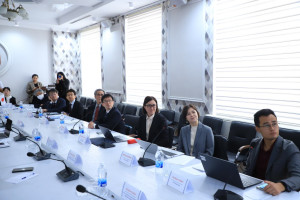
— You work as a lecturer at Osh State University and have been awarded “Best Teacher of the Year.” What are your main principles as an educator?
— Treat every student with respect, teach clearly and practically, and encourage independent thinking and curiosity.
— What advice would you give to young scientists?
— Master English thoroughly. Many talented scientists face language barriers that limit participation in international projects and publications.
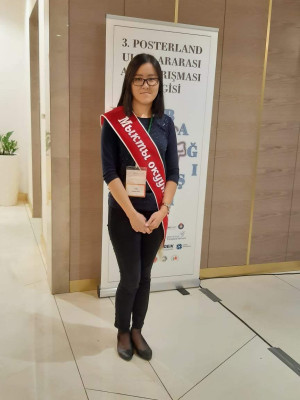
— What are your hobbies and sources of inspiration?
— I enjoy reading, currently Daniel Kahneman’s Thinking, Fast and Slow, and books on Kyrgyz history, like History of the Siberian Kyrgyz.
— How does your family support you?
— My family fully supports me, both morally and in daily life.
— What are your future plans?
— My main goal is to successfully defend my PhD. I also aim to bring international grants to Kyrgyzstan, develop new research projects, and contribute to the country through science.
Interview by: Zinagul Nuralieva
Photogallery


Main Campus of OshSU, 331 Alymbek datka Street, Osh City, Kyrgyzstan. General Division: +996 3222 7-07-12, fax: +996 3222 7-09-15, edu@oshsu.kg
OshSU Admissions Committee: +996 3222 7-08-18, priem@oshsu.kgColleges
- International Education Programs
- Medical College
- Finance and Law
- Uzgen International Medicine
- STEM Innovation
- Industrial and Pedagogical
- College of Agriculture
- Construction College
Schools
- "Arashan" Humanitarian School
- Institute of Oriental Studies
- Institute of Mathematics, Physics, Engineering and Information Technologies
- Institute of Economy, Business and Management
- Institute of Philology and Intercultural Communication
- Institute of History and Law
- Institute of Pedagogy, Art and Journalism
- Institute of Natural Sciences, Physical Education, Tourism and Agrarian Technologies
- Institute of Nanotechnology and Artificial Intelligence
Lyceums and gymnasiums
Offices
- Administrative- household supporting office
- Business Park at Osh State University
- International Relations Department
- Department of Academic Affairs and Strategic Planning for Educational Policy Development
Centers
- Cultural and Aesthetic Center named after R. Adikadyrov
- Foundation of R.Abdykadyrov
- Public Relations Center
- Internship and Career Center
- OshSU Center for Qualification Improvement
- Next Generation Hub Center
- Congress Resort OshSu Center
- Natural Resources Center
- Mountain Ecosystem Protection and Green Innovations Consulting Center
- Center for Scientific Research and Innovation


